
Views: 211 Author: Site Editor Publish Time: 2025-04-09 Origin: Site


While traditional water reducers are sufficient for standard concrete, complex project constraints demand precision-engineered solutions. Extreme pumping heights, ultra-high strength requirements, and strict slump retention push basic admixtures past their limits. Transitioning to a modern polycarboxylate superplasticizer (PCE) is not just about achieving higher slump. It is a strategic decision impacting cement consumption, labor efficiency, and structural durability. Failing to choose the right admixture can lead to costly delays and compromised concrete strength.
This guide bypasses generic benefits to break down exactly where, why, and how to apply PCE technology. We will explore strict performance criteria and verifiable project realities to help you select the ideal formulation. You will learn how to match molecular designs to your specific construction challenges, ensuring maximum yield and consistent field performance.
Core Capability: PCE achieves up to 40% water reduction at incredibly low dosages (0.2%–0.3%), utilizing steric hindrance to prevent cement flocculation.
Primary Fields: Essential for Ultra-High Performance Concrete (UHPC), Self-Compacting Concrete (SCC), precast manufacturing, and high-rise pumping operations.
Evaluation Shift: Procurement should focus on molecular adaptability (slump-retaining vs. early-strength) rather than baseline dispersion alone.
Implementation Reality: Successful adoption requires rigorous compatibility testing to manage risks like excessive air entrainment and cement alkali sensitivity.
Traditional first and second-generation admixtures hit a hard performance ceiling. Lignosulfonates and naphthalene-based products rarely push past a 15 to 20 percent water reduction limit. They often suffer from rapid slump loss during transit. Attempting to force higher performance from these older chemicals usually requires massive dosage increases. This drives up material costs without delivering reliable concrete stability.
A Polycarboxylate Superplasticizer offers a distinct chemical advantage. It relies on a sophisticated dual mechanism. First, electrostatic repulsion pushes the cement particles away from each other. Second, steric hindrance utilizes long polymer side chains to physically block particles from clumping back together. We do not need a deep academic background to understand the commercial outcome. You can achieve incredible flowability at extremely low water-to-cement ratios.
We must acknowledge the higher upfront cost per ton of PCE. However, this initial expense is easily offset on the batching plant floor. You gain the ability to reduce overall cement usage by up to 30 percent. You can safely incorporate higher volumes of supplementary cementitious materials. Mixing in more fly ash or slag becomes possible without sacrificing early compressive strength. The final financial yield heavily favors modern superplasticizers.
Modern concrete applications dictate highly specialized material behaviors. We apply PCE technology across several demanding construction sectors to meet strict engineering codes.
Engineering massive bridges or skyscrapers requires an extremely low water-to-binder ratio. You cannot afford to lose workability while minimizing water. The polycarboxylate superplasticizer water reducing agent plays a critical role here. It provides maximum particle dispersion. This allows water reduction rates to routinely exceed 30 to 40 percent. You achieve a highly dense, high-compressive-strength matrix free of internal voids.
Urban construction sites demand extended workability over long transit times. Trucks sit in traffic. Pumps push material hundreds of feet vertically. You need low viscosity to reduce pumping pressure. Specifically formulated slump-retaining variants of a PCE water reducing agent prevent premature hydration. They coat the cement grains slowly. This keeps the mix pumpable for hours, even during elevated summer temperatures.
Precast manufacturing facilities thrive on speed and volume. They require rapid early-strength development for fast mold turnover. A superior surface finish is also mandatory for architectural components. Early-strength PCE designs allow facilities to drastically reduce steam curing times. You cut expensive energy costs immediately. You also prevent the surface micro-cracking often caused by aggressive thermal curing cycles.
Complex architectural designs often feature dense rebar networks. SCC requires extreme fluidity to navigate these obstacles without human vibration. It must do this without suffering from aggregate segregation or surface bleeding. PCE balances extreme flowability with moderate paste viscosity. Heavy coarse aggregates stay suspended evenly throughout the entire pour profile.
Contractors rely on self-leveling floors, non-shrink grouts, and precise repair mortars. These require highly efficient powder-form dispersion. Solid PCE variants provide rapid wetting capabilities. They deliver a uniform, lump-free consistency immediately upon onsite mixing.
Application Field | Core Concrete Requirement | Primary PCE Role |
|---|---|---|
UHPC / High-Strength | Extremely low water-to-binder ratio | Maximum dispersion, 30-40%+ water reduction |
Ready-Mix / Pumped | Extended workability, low viscosity | Slump-retention, prevents premature hydration |
Precast Components | Rapid strength gain, fast mold turnover | Accelerated hydration, reduces steam curing |
Self-Compacting (SCC) | High fluidity without segregation | Balances extreme flow with aggregate suspension |
Dry-Mix Mortars | Rapid powder wetting, self-leveling | Immediate uniform dispersion upon mixing |
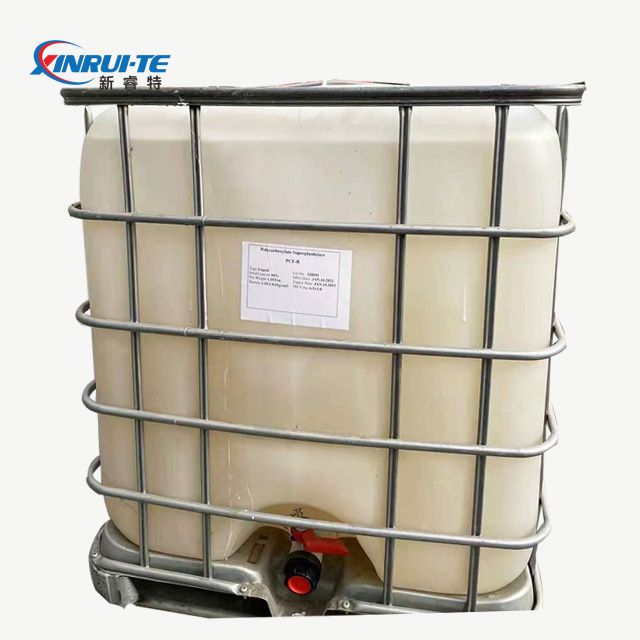
Procurement teams must move beyond generic chemical names. You must evaluate admixtures based on precise project demands and localized material properties.
Molecular Design Matching: You must categorize solutions by their specific chain structures. A high water-reducing type serves a completely different purpose than a high slump-retention type. Choose early-strength variants only if fast mold turnover or cold weather operations dictate it.
Compliance & Sustainability: Always verify environmental claims. Look for formaldehyde-free manufacturing processes. Demand a low chloride and low alkali content to actively prevent internal rebar corrosion over decades. ISO14000 certifications provide necessary supply chain trust.
Supplier Technical Support: Assess your vendor’s chemical engineering capabilities. They must possess the ability to tweak the molecular chain. Adjusting graft density and main chain length is often necessary. A quality Water Reducing Agent must be customized based on the specific aggregate profiles and cement types used in your region.
We must address the elephant in the room regarding chemical admixtures. Field implementation rarely matches perfect laboratory conditions. You will face distinct formulation risks.
Cement adaptability constraints present the largest hurdle. High or low soluble alkali content in your local cement directly impacts PCE adsorption rates. Soluble sulfates change how quickly the polymer attaches to the cement grain. A PCE that works perfectly with one regional cement brand may fail completely with another. You cannot assume universal compatibility.
Air entrapment poses another severe structural threat. PCE naturally lowers the surface tension of the mixing water. This chemical reaction often introduces unwanted micro-bubbles into the matrix. These air voids can compromise dense concrete strength and increase permeability. You must mandate a precisely matched defoamer within the liquid admixture package.
Finally, respect the extreme sensitivity to dosage. The standard required dosage is exceptionally low. It typically ranges from just 0.2% to 0.3% dry basis-to-cement ratio. Slight measuring errors on a commercial batching plant scale cause massive problems. Overdosing leads directly to severe bleeding, aggregate segregation, or dangerously prolonged setting times.
Formulation Troubleshooting Chart
Symptom: Rapid Slump Loss → Cause: High cement alkali content or insufficient slump-retaining variant used.
Symptom: Severe Bleeding / Segregation → Cause: Accidental PCE overdose or lack of fine particles in the aggregate blend.
Symptom: Low Compressive Strength → Cause: Excessive air entrapment; check the defoamer ratio in the admixture.
Protect your project margins by instituting a rigid, three-phase testing protocol before executing bulk purchase orders.
Phase 1: Lab-Scale Compatibility Testing. Never bypass initial bench trials. You must test flow spread and compressive strength at 1-day, 7-day, and 28-day intervals. Monitor the setting time strictly. Perform these tests against the exact cement brand and aggregate mix planned for the live site.
Phase 2: Sequence and Combo Trials. Test different admixture addition methods in the lab. Compare co-addition with the initial water versus delayed post-addition. Evaluate blending the PCE with separate chemical retarders for hot summer pours. Check compatibility with shrinkage-reducing agents if cracking is a concern.
Phase 3: Pilot Pour. Run a controlled mock-up pour outside the lab. Assess real-world slump retention inside a transit mixer. Check the actual pumpability under pressure. Inspect the final surface finish for blemishes before authorizing full-scale procurement.
The application of modern polycarboxylate superplasticizers extends far beyond simply making concrete wetter. It is an essential chemical lever for executing UHPC, SCC, and large-scale infrastructure projects successfully. Traditional admixtures can no longer meet the demands of aggressive construction schedules and complex structural designs.
Base your final procurement decisions on strict molecular adaptability, not blanket water-reduction marketing claims. Your success depends entirely on how well the admixture matches your specific cement chemistry and logistical constraints. Initiate a dialogue with proven suppliers today. Request specific sample variants, such as slump-retaining and early-strength formulations, to begin your baseline compatibility testing immediately.
A: Standard agents like lignosulfonates rely on basic electrostatic repulsion and cap out at 15-20% water reduction. PCE uses advanced steric hindrance, utilizing polymer side chains to physically block cement flocculation. This modern mechanism achieves 15-30%+ water reduction without sacrificing workability.
A: No. They are strictly incompatible. Mixing PCE with naphthalene-based products causes a rapid loss of workability and immediate cement flocculation. You must thoroughly flush all tanks, pumps, and hoses when switching between these two chemical families.
A: The standard dosage is extremely low, typically ranging from 0.2% to 0.3% (dry basis-to-cement ratio). Because it is highly concentrated, PCE is incredibly sensitive to over-dosing. Even slight measurement errors can cause severe segregation and bleeding.
A: High summer temperatures accelerate cement hydration, causing rapid slump loss. You must blend PCE with chemical retarding combos to maintain workability. Conversely, cold winter construction slows hydration, requiring early-strength PCE variants to ensure fast setting and safe mold turnover.
Polycarboxylate Superplasticizer (PCE) is a crucial component in modern concrete technology. Known for its exceptional water-reducing capabilities, it enhances the fluidity of concrete while maintaining its strength and durability. Polycarboxylate Superplasticizer is particularly useful in projects involving high-performance concrete, including those for railways, havens, traffic infrastructure, bridges, and electric power facilities. In this article, we explore the applications and benefits of using Polycarboxylate Superplasticizer in these critical industries, shedding light on why it has become indispensable for modern construction.
Polycarboxylate Superplasticizer (PCE) is a type of high-range water-reducing agent that belongs to the class of superplasticizers used in concrete production. PCE works by dispersing the particles within the concrete mix, allowing the water-to-cement ratio to be significantly reduced without compromising the workability. This results in stronger and more durable concrete with better flow characteristics.
What makes Polycarboxylate Superplasticizer unique is its ability to maintain workability over longer periods, which is essential for large-scale and complex construction projects. Furthermore, it improves the overall sustainability of concrete, reducing the environmental impact by decreasing water usage.
Improved Workability: PCE enhances the flowability and ease of placing concrete, particularly in large pours and intricate forms.
Reduced Water Content: The superplasticizing effect allows for a significant reduction in water content while maintaining the same consistency, resulting in denser and stronger concrete.
Enhanced Durability: Concrete treated with PCE is more resistant to cracking, weathering, and other forms of deterioration, ensuring a longer service life.
Increased Strength: By reducing water content and increasing particle dispersion, concrete with PCE achieves higher compressive and tensile strength.
In railway construction, the demand for durable and long-lasting materials is paramount. Polycarboxylate Superplasticizer helps meet these requirements by improving the strength and durability of concrete used in railway track foundations, bridge supports, and other structural elements. The enhanced workability of the concrete allows for better compaction, leading to a more stable and reliable track base that can withstand heavy loads and harsh environmental conditions.
Using PCE in railway construction contributes to sustainability by reducing water consumption in the production of concrete. In addition to minimizing water usage, the increased strength and durability of the concrete lead to longer intervals between repairs and replacements, reducing the overall lifecycle costs of railway infrastructure.
Haven and dockyard structures require concrete that can withstand exposure to saltwater, tidal action, and heavy maritime traffic. Polycarboxylate Superplasticizer is crucial in the production of high-performance concrete for these environments. By reducing the water content in the mix, PCE ensures that the concrete has the necessary density to resist erosion and corrosion over time.
In marine environments, concrete must resist the effects of saltwater, which can accelerate deterioration. Concrete treated with Polycarboxylate Superplasticizer exhibits increased resistance to chloride penetration and sulfate attack, making it ideal for use in piers, jetties, and other harbor structures. This results in significantly extended service life, lower maintenance costs, and reduced downtime for critical infrastructure.
Polycarboxylate Superplasticizer is widely used in the construction of roads, tunnels, and overpasses, where high strength and durability are required to handle constant traffic loads and environmental challenges. The superior workability of concrete mixed with PCE allows for efficient placement, even in tight or complicated forms, while also reducing the chances of cracks or other imperfections in the final structure.
The reduced water content in the concrete, achieved with Polycarboxylate Superplasticizer, enhances the concrete's ability to withstand wear from traffic and weather conditions. In addition to this, the long-lasting nature of PCE-treated concrete reduces the frequency of repairs, saving both time and money for traffic infrastructure maintenance.
Bridge construction involves intricate design requirements, including high compressive and tensile strength, durability, and the ability to withstand heavy loads. Polycarboxylate Superplasticizer is essential for producing the high-strength concrete needed for bridge decks, piers, and supporting beams. The superplasticizer ensures that the concrete mix remains workable while achieving the necessary strength for long-term performance.
Bridges are exposed to a variety of environmental stressors such as freeze-thaw cycles, road salts, and heavy traffic. Concrete mixed with Polycarboxylate Superplasticizer has enhanced resistance to these stressors, ensuring that the structure remains intact and functional for a longer period. This increased durability reduces maintenance costs and extends the lifespan of the bridge.
In the construction of power plants and electrical infrastructure, the concrete used must meet stringent performance standards. Polycarboxylate Superplasticizer improves the concrete's strength, workability, and resistance to thermal shock, which is essential for power plant environments. It helps in the construction of critical structures like cooling towers, foundations, and turbine bases, which require durable, high-strength concrete.
Electric power plants are subject to extreme temperature fluctuations, as well as exposure to chemicals and other harsh conditions. The use of Polycarboxylate Superplasticizer in concrete ensures that these structures can withstand thermal cycling and chemical exposure, leading to a longer lifespan and reduced maintenance needs.
Polycarboxylate Superplasticizer Water Reducing Agent is a game-changer in the construction of high-performance concrete. Its application in key industries such as railway, haven, traffic, bridge, and electric power infrastructure has transformed the way we approach large-scale construction projects. By enhancing the workability, strength, and durability of concrete, Polycarboxylate Superplasticizer helps build structures that are more sustainable, cost-effective, and long-lasting.
For companies like Xinrui-Te, the use of this technology not only supports the production of superior concrete but also plays a significant role in the advancement of infrastructure development worldwide. As the demand for sustainable and durable construction materials continues to grow, Polycarboxylate Superplasticizer remains at the forefront of the innovation needed to meet these challenges.


