Tel: +86-136-3560-0651  Email: rose@xinrui-te.com

PRODUCTS

You are here: Home » Products » Concrete Synthetic Fibers » Micro Synthetic Fibers » High Dispersion PP Monofilament Fiber for Concrete & Mortar

loading

Share to:
facebook sharing button
twitter sharing button
line sharing button
wechat sharing button
linkedin sharing button
pinterest sharing button
whatsapp sharing button
sharethis sharing button

High Dispersion PP Monofilament Fiber for Concrete & Mortar

Hot Sale! Our PP fiber monofilament was produced using advanced fiber-spinning technology, modified by adding functional additives and special surface treatment. It has many advantages, such as good dispersing, better water affinity, and a strong linking force.
Availability:
Quantity:
  • XRT-MPF

  • xinrui-te

  • 550340

High-Dispersion PP Monofilament Fiber for Concrete & Mortar


                                                                                                                                                ------XRT-MPF


详情1

 Property 

Our polypropylene monofilament fibers adopt an advanced spinning process, functional additives, and exclusive surface modification. When blended into concrete, cement, mortar, or plaster, these polypropylene monofilament fibers disperse evenly, exhibit excellent hydrophilicity, and achieve strong interfacial bonding.

Polypropylene monofilament fibers deliver reliable reinforcement and effective crack prevention across all cementitious materials, making them ideal for construction flooring, wall panels, and various building surfaces.


Monofilament Polypropylene Fiber data sheet

Raw Material

Polypropylene 

Crack Elongation

20+/-5%

Fiber Type

monofilament

Fiber Diameter

20um-30um

Melting Point(C Deg)

160 - 170    

Density(g/cm3)

0.91+/-0.01

Acid&Alkali Resistance

Strong

Tensile Strength(MPa)

450 min.

Water Absorbency

NO

Length

Times of 4 mm or 6 mm

Monofilament Polypropylene Fiber Feature

A). No agglomeration and easily spread around in mortar or concrete. Guarantee crack resistance effectively.

Micro fibre

B) Apply conveniently. Just add the fibers to the mortar mixture and stir for 

     a moment after adding water.

C)Has fine economic properties. The equivalent diameter of polypropylene

       monofilament fiber is only φ 25um, so the ratio of diameter. The surface is 

       high, and based on crack resistance, it can reduce the  

       amount  (0.6kg/m 3 ) and cut down the cost effectively.

D). Be better to plaster. Because a great number of thin fibers are spread into

       Mortar evenly, so the plastering is much easier.                                                            E). The polypropylene monofilament fibers have stable chemical properties,                                        Super Dispersing Fiber

        , strong acid &alkali resistance.

A straightforward cost–benefit look at polypropylene monofilament fibers

The economic costs of polypropylene monofilament fibers primarily include material purchase, construction/mixing impacts, and long‑term maintenance savings. Key points and typical figures (for reference only—check local market prices):

Cost

1. Purchase cost

Price(/kg)

1.5–6.0

Dosage(kg/m³)

0.6–2.0

Cost

0.6kg/m³

$0.9-$3.6

2.0kg/m³

$1.2-$4.0

2. Other direct or indirect costs/impacts:

You might need to mix longer or tweak the additives, which adds a bit of labor and additive costs.

Economic benefits (cost savings)

1. It can reduce plastic cracking and lower maintenance/repair costs; in some jobs, it can partially replace thin steel fibers or allow you to use less rebar/mesh, saving on materials and labor.

2. Better impact resistance and durability can make structures last longer and reduce lifecycle costs.

Monofilament Polypropylene Fiber Packing

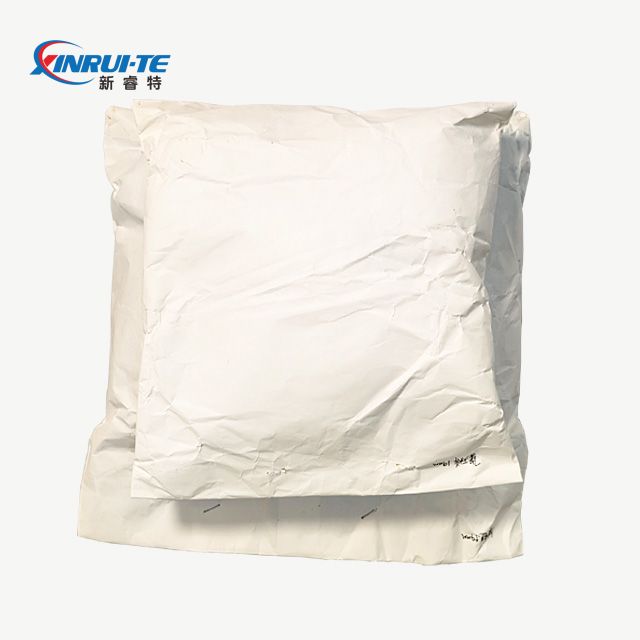
 Normal packing is 0.6 kg, 0.9 kg, or 1.0 kg per film bag; 18 kg/carton; or 20 kg/plastic woven bag. A water-soluble paper bag is available.

FAQ

1. Q: How to disperse monofilament fibers evenly in a mixer?

     A: Add fibers gradually during batching, extend mixing time slightly, and avoid pre-clumping. Use automatic dosing for large-scale 

          production.

2. Q: How do monofilament PP fibers improve concrete crack resistance?

     A: Monofilament fibers bridge microcracks, redistribute stresses, and reduce plastic and drying shrinkage cracks, improving 

          residual strength and durability.

3. Q: What is monofilament polypropylene fiber used for?

     A: Suitable for industrial floors, screeds, precast elements, repair mortars, overlays, and shotcrete where crack control and 

           durability are needed.

4. Q: How do you guarantee stable quality of micro synthetic fibers?

     A: We inspect virgin PP raw materials first, produce with automated spinning lines, conduct standard surface treatment and batch 

          sampling tests. Every lot of polypropylene monofilament fibers comes with full test reports.

5. Q: What is the standard mixing dosage of polypropylene monofilament fibers?

     A: The regular dosage of polypropylene monofilament fibers ranges from 0.6kg/m³ to 1.2kg/m³. Adjust the amount of addition 

          according to anti-crack requirements and the types of construction materials.


QUICK LINKS

PRODUCT CATEGORY

CONTACT INFO

 +86-136-3560-0651
 +86-136-3560-0651
 rose06063
  rose@xinrui-te.com
 No. 1103, 11th Floor, Zhongxin Building, No. 2688 Chuangxin Avenue, High-tech Zone, Hefei City, Anhui Province,China

SIGN UP FOR OUR NEWSLETTER

Get all the latest information on Events, Sales and Offers. Sign up for newsletter today.
Copyrights 2025 xinrui-te All rights reserved. Sitemap