| Availability: | |
|---|---|
| Quantity: | |
XRT-PLH
xinrui-te
550340
------XRT-HPF
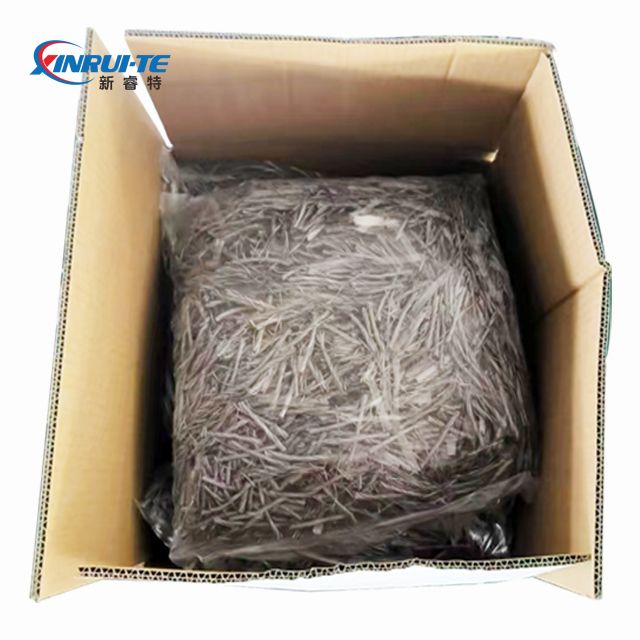
Polypropylene Hybrid Fiber is a high-performance macro-synthetic fiber manufactured from virgin polymers.
It combines twisted fiber and mesh fiber to deliver superior structural reinforcement. Engineered for durability and versatility, this fiber
exhibits high tensile strength, excellent dispersion, and outstanding corrosion resistance.
Material | 100% raw polypropylene | Tensile strength | 450MPa min |
Density | 0.91g/cm3 | E-modulus | 7500MPa min |
Length | 54mm or customized | Elongation | 12% |
Type | hybrid and non-hybrid | Melting point | 167℃ |
Diameter | 0.3mm | Color | grey and white, or customized |
Reduces plastic shrinkage cracks by about 70–90% (ASTM C157).
Helps keep cracks tiny in hardened concrete (usually under 0.1 mm).
Lets concrete survive roughly 30–50% more freeze–thaw cycles
(ASTMC666).
Cuts surface wear from abrasion by about 20–40% (ASTM C944).
Makes concrete 3–5 times tougher against impacts than plain concrete (ACI 544).
Even after cracks form, the concrete still carries a load better.
Cuts bleeding and segregation by around 40–60%, so the mix stays uniform and the finish looks cleaner.
Let concrete survive roughly 30–50% more freeze–thaw cycles (ASTM C666).
Cuts surface wear from abrasion by about 20–40% (ASTM C944).
100% virgin material
Melting&Spinning
Stretching
Twisted Filament
Mesh Filament
Twisted&Mesh Cutted Together
Package
In Warehouse
Loaded In Container
APPLICATION | DOSAGE (KG/M³) | COST (Cost mainly depends on the materials price in general) | KEY BENEFIT |
Industrial Flooring | 0.6–1.2 | USD1.5-3.0 | Crack-resistant and highly wear-resistant. |
Bridge Decks | 0.9–1.5 | USD2.5-4.0 | Stands up to freeze–thaw cycles and resists fatigue. |
Precast Concrete | 0.6–1.0 | USD1.5-3.0 | Handles bumps and cuts down on damage during handling. |
Shotcrete (Tunnels) | 1.0–2.0 | USD2.5-5.0 | Controls early cracks and stays cohesive. |
Marine Structures | 1.0–1.8 | USD2.5-4.5 | Resists chlorides and reduces spalling. |
1. Q: Is this Polypropylene hybrid fiber made of virgin or recycled material?
A: We use 100% pure virgin PP resin with no recycled materials. It features stable tensile strength, pure composition and consistent
quality for long-term concrete projects.
2. Q: What is the service life of concrete mixed with this fiber?
A: The fiber will not age, degrade, or corrode inside concrete. The whole structure can reach a design life of over 100 years, meeting
requirements for century-level infrastructure.
3. Q: Can it resist alkali and sulfate attack inside concrete?
A: Yes. It permanently adapts to the high-alkali environment of concrete and delivers outstanding sulfate resistance, solving durability issues for tunnels, mines, and saline-soil projects.
4. Q: Why choose hybrid PP fiber over ordinary monofilament fiber?
A: The twisted and mesh composite structure creates stronger bonding with cement mortar. It has better dispersion and
comprehensive anti-crack & toughening effects than common single-structure fiber.
5. Q: Do you have overseas application cases?
A: We have completed projects in Southeast Asia ports, Middle East sewage plants and European municipal tunnels. Relevant case
documents can be sent upon request.
6. Q: Can it replace steel fiber or reduce rebar?
A: Can partially replace steel for crack control/toughness, but structural load-bearing roles require design verification.
7. Q: What concrete performance improvements can be expected?
A: Typical improvements: flexural strength increase of 5–12% and significant toughness/energy absorption gains. Exact values
depend on mix design and test methods.
Learn how monofilament synthetic fibers provide 3D concrete reinforcement to prevent cracks, replace steel mesh, and enhance structural durability.
Optimize concrete floors with PP hybrid macro synthetic fibers. Replace steel mesh, stop cracks, and boost durability with dual-action reinforcement.
Learn to diagnose concrete mix imbalances. This guide covers water-cement ratios, admixture dosages, and testing to ensure structural durability.
Compare plasticizers vs. superplasticizers. Learn about water reduction, molecular mechanisms, and dosage to optimize concrete strength and budget.
Optimize industrial foam control with precise dosing, root cause analysis, and engineering strategies to prevent downtime and maximize process ROI.
Guide to steel fiber in concrete: Learn structural limits, ROI, and how to replace rebar in slabs and shotcrete for faster, more durable construction.
Learn how Polycarboxylate Superplasticizers (PCE) optimize concrete. Explore water reduction, UHPC/SCC applications, and expert selection strategies.
Master Polycarboxylate Superplasticizer (PCE) for high-strength concrete. Learn about its 50% water reduction, powder vs liquid, and applications.
Evaluate synthetic microfibers for construction and textiles. Balance structural performance with environmental compliance and sourcing risk mitigation.
Improve concrete workability and durability with sodium gluconate retarder. Learn about optimal dosage, chemical mechanisms, and project benefits.
Optimize concrete mix design with our guide to water-reducing agents. Evaluate PCE, SNF, and lignin to boost durability, strength, and workability.
Learn the difference between anti-foam agents and defoamers. Master preventive vs. reactive foam control to optimize industrial process efficiency.
Traditional concrete wall construction faces a long-standing set of operational challenges. Labor-intensive steel mesh installation consistently slows down project timelines. Over time, moisture penetration creates severe spalling risks as internal steel begins to corrode.
Traditional secondary reinforcement relies heavily on welded wire mesh. This approach demands significant manual labor. It frequently suffers from improper placement on job sites. Worse, it rarely prevents early-stage plastic shrinkage cracking.
Rising costs of heavily polymer-modified asphalt (PMA) and Stress Absorbing Membrane Interlayers (SAMI) are forcing pavement engineers to seek alternative mechanical reinforcement strategies.
Uncontrolled foam in industrial processes doesn't just look messy. It causes severe equipment cavitation and significantly reduces usable tank capacity. It also slows down production throughput and introduces critical defects into finished products.
Modern highway and industrial road construction faces massive pressure. Project owners demand aggressively accelerated timelines. They also expect extended lifecycle durability from every pavement slab.
Concrete contractors and specifying engineers face mounting operational challenges today. Unpredictable steel costs frequently squeeze tight project margins. Placing traditional welded wire mesh demands intensive manual labor and slows down pour schedules.
The concrete reinforcement industry is undergoing a massive shift. Engineers and contractors are rapidly moving away from labor-intensive traditional steel like rebar and wire mesh. Advanced engineered polymers now offer a smarter, highly efficient alternative for modern builds.
Managing foam generation remains a massive hurdle in food, beverage, and packaging production. Excess foam severely reduces processing throughput. It causes messy spillovers on facility floors. You must control this rapid macrofoam expansion without violating strict food-contact safety regulations.