
Views: 0 Author: Site Editor Publish Time: 2025-04-06 Origin: Site


Commercial and industrial concrete floors face relentless daily demands. Heavy forklift traffic and sudden thermal contraction constantly test slab integrity. Traditional reinforcement methods often require high labor and carry severe corrosion risks. They slow down project timelines and expose concrete to long-term structural deterioration.
While pure micro-fibers effectively prevent early-age cracking, they offer zero post-crack strength. Conversely, pure macro-fibers handle long-term heavy loads but miss crucial early plastic shrinkage control. Engineers recognize these gaps. They are increasingly specifying hybrid blends to address the entire lifecycle of the concrete slab. This dual-action approach ensures continuous protection from the very first day of pouring.
This guide breaks down how PP hybrid macro synthetic fibers consolidate reinforcement. You will learn exactly how they reduce project timelines. Finally, we will show how these advanced materials deliver verifiable structural integrity for heavy-duty concrete floors.
Dual-Action Reinforcement: Hybrid blends combine micro-fibers (for plastic shrinkage) and macro-fibers (for post-crack flexural toughness) into a single dosing solution.
Cost & Time Efficiency: Replaces traditional welded wire mesh (WWM) and light rebar, eliminating steel placement labor and storage costs.
Corrosion Resistance: 100% synthetic polypropylene composition completely removes the risk of concrete spalling due to rust.
Implementation Reality: Success relies on accurate mix design, proper batching protocols to avoid fiber "balling," and adherence to ASTM/ACI performance standards.
Contractors often rely on Welded Wire Mesh (WWM) or light rebar for ground-supported slabs. These legacy systems create significant operational bottlenecks on the job site. Handling, cutting, and tying steel slows down pour schedules considerably. Workers spend countless hours prepping the steel grid before a single concrete truck arrives. This extensive preparation delays the actual concrete placement and strains project budgets.
Placement errors further degrade the effectiveness of steel reinforcement. During the active pour, crews frequently trample WWM down to the bottom of the slab. Once pinned against the subgrade, this steel becomes structurally useless. It cannot hold mid-depth or upper-surface cracks together. Engineers design wire mesh to sit in the upper third of the slab. Real-world construction chaos rarely allows this perfect placement. As a result, the concrete floor remains highly vulnerable to widening fractures under active load.
Some builders try to solve early cracking issues with basic micro-fibers alone. Micro-fibers excel at stopping early plastic shrinkage cracks. However, they present a major structural limitation. They offer absolutely zero post-crack load-bearing capacity. Once the concrete hardens and faces heavy warehouse traffic, micro-fibers cannot bridge widening fractures. They simply pull apart. This leaves a massive reinforcement gap in your design. You need a comprehensive system acting throughout the entire slab depth across its entire lifespan.
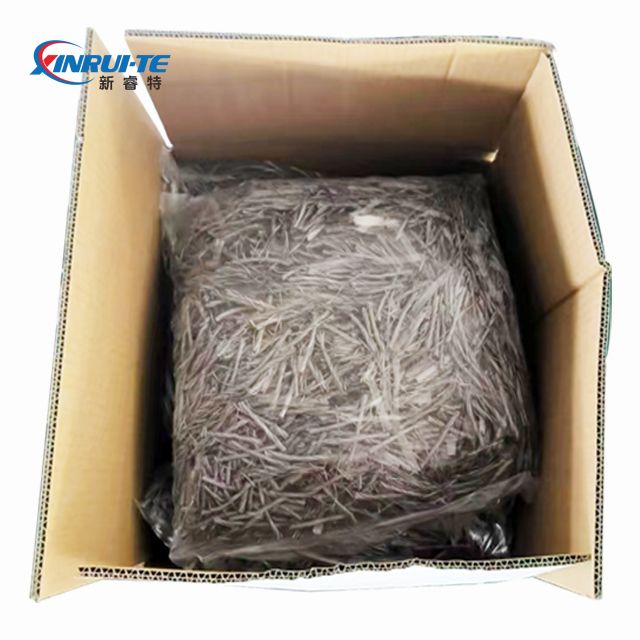
You need a robust solution addressing both early hydration stresses and long-term dynamic forces. Hybrid reinforcement provides this exact capability without any hyperbole. The mechanical success relies purely on the internal synergy of the blended materials. They work in tandem across different curing stages.
Concrete remains highly vulnerable during the first 24 hours of curing. As the mixture cures, internal water evaporates rapidly. This rapid moisture loss creates microscopic internal fissures. Micro-fibers intercept these tiny cracks before they grow. They act as microscopic safety nets. They stabilize the plastic concrete during its most fragile hydration period. By stopping microscopic flaws early, they preserve the concrete's intrinsic strength.
After the concrete hardens fully, the slab faces dynamic operational loads. Forklifts, heavy racking systems, and seasonal thermal shifts apply immense stress daily. If the concrete eventually fractures under extreme stress, Macro Synthetic Fibers immediately take over. They distribute heavy-duty loads evenly across the slab. They provide critical impact resistance against dropped machinery. More importantly, they hold existing cracks tightly together. This residual strength ensures the concrete floor remains functional and safe despite visible hairline fractures.
Combining these two specialized phases creates a true three-dimensional reinforcement matrix. Millions of individual fibers disperse evenly throughout every cubic yard of concrete. Unlike flat steel mesh, this hybrid blend protects the concrete floor vertically and horizontally. It reinforces the slab from the top surface down to the subgrade.
Decision-makers require clear, objective data to choose the right reinforcement strategy. Engineers and General Contractors must evaluate load capacity, physical durability, and upfront material costs. The following evaluation criteria clarify how modern synthetics outperform older methods.
Standardized beam tests prove exactly how pp hybrid fibers perform under stress. They routinely match or exceed the equivalent post-crack performance of traditional WWM. Steel mesh only works in a single, two-dimensional plane. If a crack occurs outside that specific plane, the steel provides no support. Hybrid fibers reinforce the concrete in all directions simultaneously. When a crack begins, hundreds of high-tensile synthetic strands bridge the gap immediately. This multidirectional support prevents cracks from widening under heavy, repetitive loads.
Steel carries an inherent and unavoidable flaw: oxidation. When moisture eventually penetrates concrete joints, embedded steel rusts. The rust expands dramatically. This expansion causes severe concrete spalling and surface destruction. Polypropylene completely bypasses this issue. It offers immense chemical resistance. Synthetic fibers easily withstand aggressive de-icing salts and harsh industrial chemicals. Your slab remains structurally intact without any hidden internal deterioration.
Steel market pricing remains notoriously volatile worldwide. Sudden commodity price spikes frequently disrupt tight construction budgets. Purchasing steel requires careful timing and complex storage logistics. Synthetic alternatives stabilize your upfront material costs. You pay a predictable price per cubic yard of concrete. This shields your project budget from sudden international steel market fluctuations.
Performance Feature | Welded Wire Mesh (WWM) | Pure Micro-Fibers | PP Hybrid Fibers |
|---|---|---|---|
Early Shrinkage Control | Poor (Activates late) | Excellent | Excellent |
Post-Crack Load Support | Moderate (If placed perfectly) | None | High / Excellent |
Corrosion Risk | High | Zero | Zero |
Placement Speed | Very Slow | Very Fast | Very Fast |
Plant managers and experienced concrete finishers often express justified skepticism toward new additives. Fiber is certainly not a magic powder. It requires precise handling, accurate dosing, and strict mixing protocols. Acknowledging these realities builds trust between engineers and the field crew.
Proper fiber introduction at the batch plant is absolutely crucial. Prevent clumping or "balling" inside the mixer drum. Never dump tightly packed fibers into an empty mixer. Operators should add PP Macro Fiber blends onto the aggregate conveyor belt during loading. Alternatively, they can use tail-end loading after batching all other materials. Once added, the drum must mix at high charging speed for at least five minutes. This ensures perfect three-dimensional dispersion before the truck leaves the plant.
High-dose macro fibers can visually alter the concrete's apparent slump. The mix may look stiffer or drier than it actually is. Finishers might feel tempted to add excess water to compensate. Do not allow this under any circumstances. Extra water severely weakens the concrete's final compressive strength. Instead, you must use Superplasticizers. High-Range Water Reducers (HRWR) restore flow and workability safely. They allow easy placement without compromising the engineered mix design.
Concrete finishers frequently worry about stiff fibers protruding from the final polished surface. Following specific best practices eliminates this issue entirely:
Use laser screeds or vibrating screeds to actively push fibers slightly below the surface paste.
Keep the magnesium float angle very flat during the initial early passes.
Avoid over-troweling the surface prematurely while bleed water remains present.
Apply a proper power trowel pan to seal the top layer cleanly and bury any floating strands.
Selecting the right manufacturer ensures your project meets strict safety and building standards. Vet suppliers rigorously before approving any material substitutions. Reputable companies provide transparent data and robust technical support.
Demand independent, third-party testing data upfront. Never accept vague marketing claims regarding load capacity. Request formal ASTM C1609 test reports to verify actual post-crack flexural performance. Ask for ASTM C1579 test data to confirm plastic shrinkage control capabilities. Credible fiber suppliers provide these standardized engineering documents readily.
A reliable supplier does much more than simply ship products. They must offer robust in-house engineering calculations. They use established ACI 360R guidelines to convert existing steel mesh designs into safe synthetic solutions. The supplier will provide the exact equivalent fiber dosage rates required to match your original structural intent.
Structural engineers and project managers should act now to optimize their next pour. Contact verified synthetic suppliers today. Request specific technical data sheets (TDS) for your particular application. Ask them to run project-specific dosage calculations. This proactive step guarantees structural compliance while maximizing your site efficiency.
Transitioning to a hybrid polypropylene fiber solution brings massive operational advantages. It remains a proven, evidence-based strategy for commercial and industrial slabs. You can build faster, safer, and highly durable floors. These advanced fibers eliminate severe steel-placement delays. They also banish devastating corrosion risks from your facilities.
By blending micro and macro strands, you provide essential three-dimensional strength. This protection lasts from the very first day of curing through decades of heavy mechanical use. Submit your floor slab specifications to a qualified supplier today. Request a complimentary fiber replacement calculation. Contact the technical sales team soon to confirm precise pricing and material availability for your next major concrete pour.
A: They can fully replace Welded Wire Mesh (WWM) and light temperature/shrinkage rebar in ground-supported slabs. They are not intended to replace primary structural rebar in suspended slabs or heavy foundations.
A: Dosage varies based on expected loads and slab thickness, typically ranging from 3 to 7.5 lbs per cubic yard (1.8 to 4.5 kg/m³). An engineer must determine exact rates through calculations.
A: When batched correctly with the appropriate water-to-cement ratio and plasticizers, hybrid fibers remain highly pumpable. Line size and pump pressure may need minor adjustments for very high dosages.
Concrete has long been the backbone of construction, prized for its compressive strength and durability. However, its inherent weakness in tension often leads to cracking, especially under load or due to environmental factors. The evolution of reinforcement techniques has addressed this challenge, with a notable breakthrough being the introduction of PP (polypropylene) hybrid macro synthetic fibers.
Traditionally, concrete’s vulnerability to tensile forces has necessitated the use of reinforcement. Steel rebar has been the standard choice, providing strength and stability to structures. However, the complexities involved in the installation of steel reinforcement—such as positioning, labor costs, and susceptibility to corrosion—have paved the way for alternative solutions.
PP hybrid macro synthetic fibers emerge as a revolutionary reinforcement method, addressing many of these limitations. These fibers are designed to disperse uniformly throughout the concrete mix, providing three-dimensional reinforcement that improves the material's overall performance.
PP hybrid macro synthetics fibers are made from specially engineered polypropylene materials. Unlike traditional steel reinforcement, which is continuous and must be carefully placed, these fibers are discontinuous and randomly distributed within the concrete. They are typically longer and thicker than microfibers, with lengths ranging from 30 mm to 50 mm, providing substantial structural benefits.
The hybrid nature of these fibers often combines different materials or fiber types, optimized to improve concrete's mechanical properties. The primary functions of PP hybrid macro synthetics fibers include enhancing tensile strength, improving ductility, and controlling cracking, making them an ideal choice for a variety of concrete applications.
One of the most significant advantages of using PP hybrid macro synthetics fibers is their ability to reduce cracking. Concrete is susceptible to cracking during the curing process due to shrinkage and temperature changes. These fibers improve the concrete's tensile strength, allowing it to absorb stresses that would otherwise cause cracks. This property is particularly crucial in concrete floors, which are often exposed to dynamic loads.
Concrete floors must withstand bending and flexural stresses, especially in industrial and commercial settings with heavy machinery. PP hybrid macro synthetic fibers enhance concrete flexural strength, ensuring floors remain stable and functional under load. This improvement not only prolongs the structure's lifespan but also reduces the need for frequent repairs.
In environments where heavy objects may fall or be dropped, concrete impact resistance is paramount. The incorporation of PP hybrid macro synthetic fibers significantly increases the concrete's resistance to impact, mitigating the likelihood of surface damage. This advantage is especially beneficial in warehouses, factories, and other industrial settings.
Durability is a critical factor in the longevity of concrete structures. PP hybrid macro synthetic fibers improve the overall durability of concrete by reducing permeability, which helps prevent water intrusion. This characteristic is vital for protecting the structural integrity of concrete walls and floors in areas subject to moisture or chemical exposure.
Although the initial cost of incorporating PP hybrid macro synthetic fibers may be higher than traditional methods, the long-term benefits can lead to significant savings. Reduced maintenance and repair costs, combined with the enhanced durability and longevity of the concrete, make this reinforcement method cost-effective.
As sustainability becomes increasingly important in construction, the environmental benefits of PP hybrid macro synthetic fibers cannot be overlooked. These fibers require less material overall, reducing the carbon footprint associated with transport and installation. Additionally, the extended service life of concrete reinforced with these fibers means fewer repairs and replacements, contributing to a more sustainable construction approach.
PP hybrid macro synthetic fibers have gained prominence in the construction industry because of their versatility and effectiveness in enhancing concrete performance. These fibers are designed to improve various aspects of concrete structures, from durability to aesthetic appeal. Here’s a closer look at key applications of PP hybrid macro synthetic fibers across different construction projects.
In industrial settings, concrete floors often face heavy loads and dynamic stresses from machinery and equipment. Incorporating PP hybrid macro synthetic fibers significantly enhances the structural integrity of these floors. By distributing stress evenly throughout the concrete, these fibers reduce the likelihood of cracking, extending the surface's lifespan. This is especially critical in environments such as factories, warehouses, and distribution centers, where floor integrity is essential for operational efficiency.
Precast concrete components, such as beams, slabs, and panels, benefit immensely from the uniform performance offered by PP hybrid macro synthetic fibers. When mixed into the concrete, these fibers ensure consistent strength and durability across the entire precast element. This consistency is vital for maintaining quality control in construction projects, where variations in material properties can lead to structural failures or increased maintenance costs.
Adding PP hybrid macro synthetic fibers to concrete walls improves stability and crack resistance. This characteristic is particularly beneficial in areas prone to seismic activity or significant temperature fluctuations. In such environments, maintaining wall integrity is vital for safety and structural resilience. The fibers help absorb and dissipate stress, thereby minimizing the risk of damage and ensuring long-lasting performance.
In pavement and roadway construction, PP hybrid macro synthetic fibers play a crucial role in improving concrete performance under traffic loads. Incorporating these fibers enhances the material's resistance to cracking and deformation, resulting in smoother, more durable surfaces. This is essential for maintaining road safety and reducing the frequency of repairs and resurfacing, ultimately saving costs over the roadway's lifespan.
Airport runways face extreme conditions, including the weight of heavy aircraft and frequent thermal cycles. Using PP hybrid macro synthetic fibers in runway construction improves the durability and resilience of the concrete. By reinforcing the material, these fibers improve its ability to withstand the stresses of landings and takeoffs, helping keep runways safe and functional for air travel.
For decorative applications, such as stamped or colored concrete, PP hybrid macro synthetic fibers allow greater design flexibility while maintaining structural integrity. These fibers let contractors create aesthetically pleasing surfaces without compromising performance. Whether it's for walkways, patios, or artistic installations, the versatility of PP hybrid macro synthetics fibers supports creative designs that also stand the test of time.
For those looking to incorporate high-quality PP hybrid macro synthetics fibers into their construction projects, Xinrui-Te Import & Export Co., Ltd. stands out as a trusted supplier. Committed to excellence and innovation, Xinrui-Te specializes in advanced synthetic fiber solutions tailored to the needs of various construction applications.
Their industry expertise ensures clients receive the highest-quality materials that enhance the performance of concrete structures. By choosing Xinrui-Te Import & Export Co., Ltd., contractors and construction firms can access reliable products that contribute to better project outcomes and overall safety. Experience the benefits of high-performance PP hybrid macro synthetics fibers by partnering with Xinrui-Te for your next project.


