
Views: 0 Author: Site Editor Publish Time: 2024-02-06 Origin: Site
Traditional secondary reinforcement relies heavily on welded wire mesh. This approach demands significant manual labor. It frequently suffers from improper placement on job sites. Worse, it rarely prevents early-stage plastic shrinkage cracking. The construction industry recognizes these physical limitations. We have shifted toward advanced composite solutions.
The adoption of concrete fibers has moved from a niche experiment to standard practice. They effectively enhance durability. They resist sudden impacts and guarantee long-term structural integrity. This transition fundamentally changes how structural engineers design industrial flatwork.
This guide equips structural engineers and contractors with an evidence-based evaluation framework. You will discover practical methods for selecting and specifying these essential materials. We explore structural considerations, batching realities, and actionable procurement steps. You can confidently deploy these advanced materials across commercial and industrial projects.
Targeted Crack Control: Micro-fibers mitigate early plastic shrinkage, while macro-fibers and steel fibers provide post-crack load capacity.
Labor & Schedule Optimization: Properly specified concrete fibers can safely replace welded wire fabric (WWF) and light rebar in specific flatwork, directly reducing labor hours and material handling risks.
Mitigating Implementation Risks: Success requires strict adherence to mix design adjustments—specifically managing slump loss and preventing fiber "balling" during batching.
Compliance Validation: Shortlisting suppliers requires verifiable testing data adhering to ASTM C1116 and ACI 544 guidelines.
Many project managers struggle against the hidden costs of traditional reinforcement. Storing welded wire fabric demands massive laydown areas. Tying mesh or light rebar consumes hundreds of labor hours. Moving heavy steel mats poses constant safety risks to your workforce. Furthermore, contractors often encounter serious placement errors. A common field error involves mesh sinking directly to the bottom of the slab. Reinforcement resting in the dirt provides absolutely zero structural value. You must maintain reinforcement in the upper third of the slab to control cracking.
Engineers specify reinforcement alternatives based on strict performance benchmarks. Moving away from wire mesh requires achieving three primary success criteria. We must observe measurable improvements across the board.
Measurable Reduction in Cracking: The slab must show a dramatic decrease in plastic shrinkage. Settlement cracking must drop significantly during the critical curing phase.
Enhanced Physical Resistance: Industrial floors demand high impact resistance. Facilities also need superior shatter and abrasion resistance to handle heavy forklift traffic.
Improved Weathering Durability: High-performance slabs must show improved freeze-thaw durability. Reduced permeability remains a non-negotiable metric for exterior pavements.
Integrating synthetic or metallic strands directly into the mix solves the placement problem. The reinforcement distributes evenly throughout the entire volume. You eliminate the risk of sunken mesh entirely. Your crews spend less time tripping over steel mats and more time pouring.
Not all reinforcements serve the same purpose. You must analyze the unique categories available today. Selecting the wrong variant leads to costly structural failures.
Micro-synthetic options typically consist of ultra-fine polypropylene or nylon strands. Their primary function focuses entirely on controlling plastic shrinkage cracks. They perform best during the critical first 24 hours of curing. As bleed water escapes the slab, these micro-strands hold the cement matrix together. However, micro-synthetics carry strict limitations. They do not provide structural load-bearing capacity. You cannot use them to replace heavy rebar.
Macro-synthetic variants handle far more demanding environments. High dosage rates provide excellent post-crack structural integrity. They remain completely immune to rust and corrosion. You will find them ideal for harsh exterior pavements. Many contractors specify Concrete Fibers of this type for aggressive industrial environments. They work perfectly in slabs on grade. They also dominate modern shotcrete applications.
Metallic strands deliver massive physical strength. They boast extremely high tensile capacities. They carry heavy loads and bridge both micro and macro cracks seamlessly. Heavy dynamic loads require this exact level of strength. Steel variants dominate heavy-duty industrial flooring. They reinforce suspended slabs and protect high-impact loading dock zones.
Specialized architectural projects often call for Other Concrete Fibers. Alkali-resistant (AR) glass serves a distinct architectural purpose. Manufacturers use AR glass for ultra-thin cladding and architectural precast panels. It offers high tensile strength without rusting. Cellulose and natural fibers also exist in the market. Engineers use them sparingly for niche, low-carbon mix designs.
Fiber Category | Primary Function | Ideal Applications | Corrosion Risk |
|---|---|---|---|
Micro-Synthetic | Plastic shrinkage control (< 24 hrs) | Residential flatwork, stucco, driveways | None |
Macro-Synthetic | Post-crack structural integrity | Industrial floors, exterior pavements, shotcrete | None |
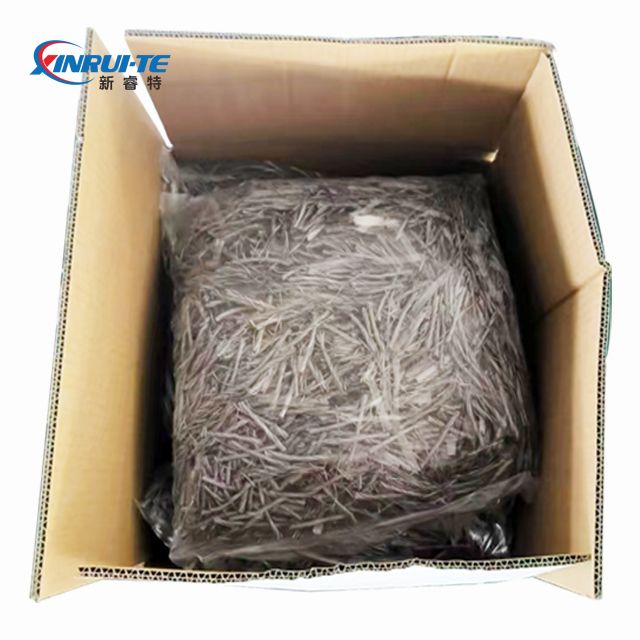
Steel | High tensile load-bearing capacity | Heavy-duty flooring, suspended slabs | High (if exposed) |
AR Glass | Thin-profile tensile strength | Architectural panels, GFRC cladding | None |
Engineers evaluate reinforcements across several strict physical dimensions. You must match the physical features of the material to your desired project outcomes.
Consider the aspect ratio first. This metric compares the total length against the cross-sectional diameter. High aspect ratios increase mechanical bonding within the cement matrix. More surface area means better grip. However, high aspect ratios can severely reduce mix workability. You must balance internal bonding strength against on-site placement ease.
Tensile strength and the modulus of elasticity matter immensely. You must match the yield strength to specific load requirements. Industrial slabs endure different stresses than residential driveways. The chosen reinforcement must resist these exact structural loads. Steel typically offers the highest modulus of elasticity. Macro-synthetics provide a lower modulus but compensate through high dosage volumes.
Dosage calculations require absolute precision. We establish the exact pounds-per-cubic-yard (lbs/yd³) needed. This calculation achieves the specified residual strength. A sloppy dosage calculation compromises the entire mix. You risk under-reinforcing the slab or causing batching failures. Always consult the manufacturer's engineering tables for exact dosage rates.
Environmental exposure dictates corrosion resistance requirements. Evaluate the risk of de-icing salts before choosing steel variants. Harsh winter climates often push engineers toward synthetic options. Regardless of material, ensure strict compliance. All specified materials must meet ASTM C1116 specifications. This standard governs the acceptable performance criteria for fiber-reinforced mixtures.
Theoretical designs often clash against field realities. You must manage specific risks during the batching and finishing phases. Proper execution guarantees structural success.
Workability challenges many contractors. You must anticipate a natural reduction in visual slump. The mixture will feel stiffer than unreinforced mud. A critical rule of thumb exists here. Never add water to restore the lost slump. Excess water destroys the water-cement ratio. It weakens the final slab. Instead, use appropriate superplasticizers. High-Range Water Reducers safely restore workability without compromising strength.
The "balling" effect ruins pours. Strands can clump together during mixing. You must mitigate this risk immediately. Proper batching sequences prevent clumping. Introduce the materials gradually onto the aggregate conveyor belt. Do not dump them into the mixer all at once. Maintain optimal mixing times. We typically recommend 4 to 5 minutes at mixing speed to ensure even distribution.
Finishing adjustments often cause contractor skepticism. Crews worry about surface aesthetics and exposed hairy strands. We recommend the following best practices:
Use vibrating laser screeds to push aggregates down and bring paste to the surface.
Minimize aggressive troweling whenever possible.
Keep trowel blades as flat as possible during the initial passes.
Time the finishing process perfectly. Over-working the surface tends to pull strands upward.
Pumping these modified mixes requires equipment adjustments. You must adjust line sizes accordingly. Pump pressures need careful monitoring. High-volume macro-synthetic or steel mixtures demand 4-inch or 5-inch pump hoses. Avoid using reducers at the end of the line. These adjustments accommodate the bulky mixture safely and prevent dangerous line plugs.
Procurement teams must follow strict shortlisting logic. Sourcing reliable reinforcement demands meticulous supplier evaluation. Do not treat these engineered materials as basic commodities.
Always request transparent testing data. You must reject generic marketing claims outright. Demand specific, engineered reports from independent laboratories. For example, request ASTM C1609 test results. This report validates the actual flexural performance of the reinforced beam. It proves the material's ability to carry post-crack loads.
Evaluate the supplier's technical support capabilities. Selling materials is not enough. The manufacturer must provide extensive mix-design consulting. They should offer on-site batching support during the first pour. Ask if they supply stamped engineering calculations. True manufacturing partners reduce your structural liability. They help your engineers transition away from welded wire mesh safely.
Mandate pilot testing before full-scale deployment. Field conditions vary wildly from laboratory environments. You should order a trial batch first. Conduct a small test pour on site. This validates workability and finishability. You can observe actual slump behavior. A successful pilot test guarantees a smooth project rollout and builds contractor confidence.
Composite reinforcement represents a highly scalable solution. It drastically improves slab durability while cutting manual labor demands.
Success depends on accurate engineering specification. You must match the material type against specific environmental exposures and load demands.
Implementation requires strict batching protocols. Superplasticizers must replace added water to maintain the structural integrity of the mix.
Consult a structural engineer today. Request a comparative load analysis between your existing mesh specifications and a tailored composite mix.
A: Concrete fibers can safely replace welded wire fabric and light temperature/shrinkage rebar in slabs-on-grade and specific precast elements. However, they are not a replacement for primary structural rebar in suspended slabs, columns, or structural beams designed to carry heavy flexural loads.
A: Micro-fibers are generally invisible after finishing. Macro-synthetic and steel fibers can occasionally protrude if improper finishing techniques are used. Utilizing a vibratory screed and adjusting trowel blade angles usually resolves surface aesthetic issues.
A: Dosage varies entirely by fiber type and project goal. Micro-synthetics typically range from 0.5 to 1.5 lbs/yd³ for shrinkage control. Macro-synthetics require 3 to 7.5 lbs/yd³. Steel fibers can range from 25 to over 60 lbs/yd³ for heavy structural performance.
A: Alkali-Resistant (AR) glass fibers are primarily used for Glass Fiber Reinforced Concrete (GFRC) to create thin, lightweight architectural panels. They offer high tensile strength without the risk of rust but are generally less suited for heavy industrial pavement compared to steel or macro-synthetics.
Fiber-reinforced concrete improves the durability of concrete by reducing crack widths, which are typically caused by plastic shrinkage, long-term drying shrinkage and thermal changes. Our synthetic reinforcement fibers offer superior strength, durability and an aesthetically pleasing surface finish, which can reduce project costs by reducing construction time while extending the life of concrete applications. The main standard for fiber reinforced concrete is ASTM C 1116 and EN14889.
Today, a wide variety of fibers are available on the market for reinforcing concrete. These include micro and macro synthetic fibers, steel and blended fibers. With so many options out there, If without enough knowledge of fibers ,it can be difficult to determine exactly which fiber is needed for a given application.
Fibers Type:
1.Microfibers are fibers with a diameter less than 0.3 mm. Microfibers are either monofilament or fibrillated. Microfibers are used for plastic shrinkage control (cracking that may occur within the first 24 hours of concrete curing), impact protection and fire and spalling protection. Microfibers are not structural reinforcement fibers and cannot replace any structural steel members.
2.Structural macro fibers have a diameter greater than 0.3 mm. Macro fibers can be used as a replacement for crack control mesh or as structural reinforcement in concrete or shotcrete. Macro fibers are used where an increase in residual (post-cracking) flexural strength is required.
The diameter of structural macrofibers is greater than 0.3 mm. Macrofibers can be used as a replacement for crack control mesh and as structural reinforcement for concrete or shotcrete. Macrofibers are used where increased residual (post-cracking) flexural strength is required.
Advantage of fibers-reinforced concrete.
Improved concrete Quality,
Effective tight crack control,Extends service life with reduced maintenance,Long-Term Cost Savings,
Reduce Construction Time,Improved worker safety,
Reduces Joints.
Advantages of fiber reinforced concrete.
Improve concrete quality;
Effective and tight crack control reduces maintenance,
extends service life,
saves costs in the long term.
Reduce construction time and improve worker safety
Reduce joints.
Mainly Application of fibers as below:
Interior flooring in retail and industrial units, schools, residential buildings, offices etc.
External hard objects such as truck and car parking areas, storage areas, distribution centers Precast concrete elements such as lintels, beams, pipes, water storage tanks, walls, etc.


